
Introduction
In today’s rapidly evolving digital world, Digital Twin Technology stands out as one of the most transformative innovations of the 21st century. Originally rooted in aerospace engineering, this technology has now expanded across industries — from manufacturing and healthcare to smart cities and energy management.
By creating a virtual replica of a physical asset, digital twins allow companies to simulate, predict, and optimize performance in real-time. In 2025, the global digital twin market is projected to exceed $100 billion, driven by advancements in AI, IoT, and cloud computing.
What is Digital Twin Technology?
A digital twin is a virtual model of a real-world object, process, or system. It mirrors its physical counterpart through real-time data, sensors, and analytics, enabling monitoring, simulation, and optimization.
In simple terms:
A digital twin acts like a mirror — reflecting the behavior and performance of its physical version through digital means.
How Digital Twin Technology Works
Digital twins function through a three-step integration:
| Component | Description |
|---|---|
| Physical Object | The real-world asset or system (e.g., a car engine, wind turbine, or building). |
| Digital Replica | A software-based 3D or data model representing the physical object. |
| Data Connection (IoT & Sensors) | Continuous real-time data transfer that keeps both systems synchronized. |
These connections allow engineers to analyze performance, predict issues, and make informed decisions before problems occur in real life.
Key Components of Digital Twin Technology
- IoT (Internet of Things) – Sensors collect real-time data from physical assets.
- Cloud Computing – Stores and processes massive amounts of data efficiently.
- Artificial Intelligence (AI) – Analyzes data for predictive insights.
- Machine Learning (ML) – Improves models based on historical data patterns.
- Simulation Tools – Create realistic 3D and dynamic models for virtual testing.
Applications of Digital Twin Technology in 2025
Digital twin technology is making a global impact across multiple sectors. Below are key areas where it’s transforming business operations.
1. Manufacturing
Manufacturers use digital twins to simulate production lines, monitor machinery, and predict equipment failures.
Example: Siemens uses digital twins to improve factory efficiency and reduce downtime.
2. Healthcare
In healthcare, digital twins model the human body or organs to test treatments before applying them to patients.
Example: Philips creates digital twins of patient data for personalized medicine and improved diagnosis.
3. Smart Cities
Governments use digital twins to simulate city infrastructure for better planning, resource management, and sustainability.
Example: Singapore’s “Virtual Singapore” project uses digital twins for urban planning and emergency management.
4. Aerospace and Defense
Digital twins simulate aircraft performance under various conditions to reduce maintenance costs and improve safety.
Example: NASA pioneered digital twin models for spacecraft performance optimization.
5. Automotive Industry
Car manufacturers use digital twins for vehicle design, crash simulations, and predictive maintenance.
Example: Tesla uses vehicle data to continuously improve car performance through digital twin modeling.
6. Energy and Utilities
Energy companies monitor grid performance and predict failures through digital twins.
Example: GE uses digital twins for predictive maintenance in power plants.
Benefits of Digital Twin Technology
| Benefit | Description |
|---|---|
| Predictive Maintenance | Prevent equipment failures before they occur. |
| Reduced Costs | Save resources through virtual testing. |
| Improved Efficiency | Optimize production and operation cycles. |
| Faster Innovation | Test designs digitally before implementation. |
| Enhanced Decision-Making | Real-time data leads to informed choices. |
| Sustainability | Reduce waste and energy consumption through simulations. |
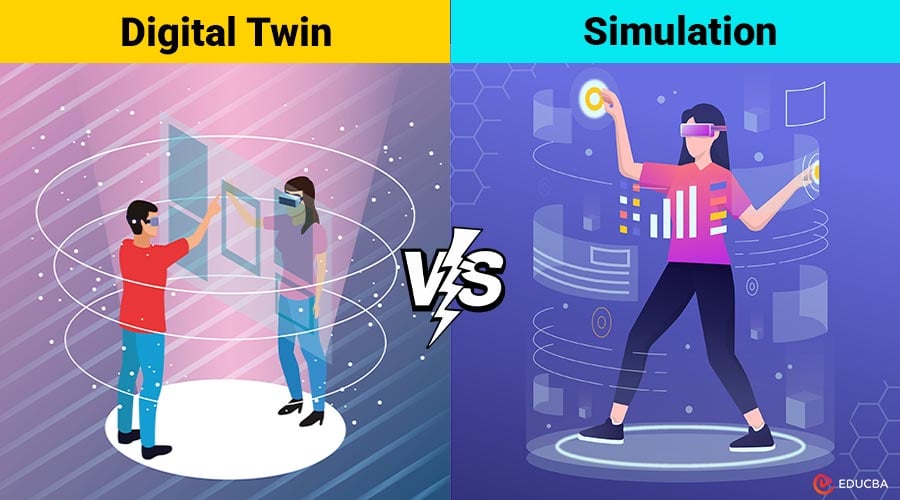
Digital Twin vs Simulation
| Feature | Digital Twin | Simulation |
|---|---|---|
| Real-time Data | Yes, continuously updated via IoT sensors. | No, static data. |
| Interactivity | High (live connection to physical object). | Low (theoretical model). |
| Predictive Analytics | Advanced | Limited |
| Use Case | Continuous optimization and monitoring. | Scenario testing and design. |
Top Companies Using Digital Twin Technology in 2025
- Siemens – Leading provider of industrial digital twin solutions.
- IBM – Uses AI-powered twins for predictive analytics.
- Microsoft Azure – Offers digital twin cloud platforms.
- General Electric (GE) – Integrates twins in aviation and energy sectors.
- PTC – Provides IoT-driven digital twin platforms for industries.
- Autodesk – Utilized for architecture and smart city modeling.
Challenges of Digital Twin Technology
- High Implementation Cost – Requires advanced infrastructure and IoT integration.
- Data Security Concerns – Sensitive operational data must be protected.
- Complexity in Integration – Linking multiple systems and devices can be difficult.
- Skilled Workforce Shortage – Demand for IoT and AI experts is rising rapidly.
Future of Digital Twin Technology
The future of digital twin technology is tightly linked to AI, 5G, and blockchain.
By 2030, almost every industrial system will have a digital twin. Integration with metaverse platforms will even allow immersive, real-time monitoring and design collaboration.
Key trends shaping its future:
- Integration with AI & IoT ecosystems.
- Widespread use in construction and healthcare.
- Growth in smart city modeling.
- Focus on sustainability and climate modeling.
FAQs About Digital Twin Technology
1. What is Digital Twin Technology used for?
Digital twin technology is used to create a virtual replica of a physical object or system for monitoring, testing, and improving performance.
2. How does a digital twin differ from a simulation?
A simulation is static and hypothetical, while a digital twin uses real-time data for continuous monitoring and predictive analysis.
3. Which industries use digital twin technology most?
Manufacturing, healthcare, energy, aerospace, and smart city planning are top users of digital twin technology.
4. What are the main benefits of digital twin technology?
It enhances productivity, reduces costs, improves decision-making, and enables predictive maintenance.
5. Is digital twin technology part of Industry 4.0?
Yes, it is a core component of Industry 4.0, combining IoT, AI, and data analytics for smart operations.
Conclusion
Digital Twin Technology is no longer a futuristic concept — it’s a practical, revolutionary tool shaping modern industries. From factories to hospitals, and from smart cities to renewable energy grids, digital twins are transforming how we design, monitor, and optimize physical systems.
As we move deeper into 2025 and beyond, embracing this technology will be vital for businesses and professionals aiming to stay ahead in the era of Industry 4.0. Whether you’re a student exploring emerging technologies or a company ready to innovate, digital twins represent a gateway to a smarter, more efficient world.
Internal Links
- Study in USA Guide
- Top Online Degree Programs in USA
- Top Technology Courses for International Students
External Links
- U.S. Department of Energy – Digital Twin Research
- Siemens Digital Industries
- IBM Digital Twin Solutions